Showing posts with label spirituality. Show all posts

Sunday, March 01, 2009

Living Jesus: Learning the Heart of the Gospel
By Luke Timothy Johnson
Harper San Francisco
© 1999
210 pages


Purpose: “I have written this book for people who, like me, find much of what is called spirituality too far removed from traditional Christian faith, and much of what is written about Jesus too little concerned with the transformation of human freedom” (preface).

Part 1: The Truth that is in Jesus
  • He is the Living One
  • Learning Jesus through tradition
  • He Bodies forth whose glory is past change
  • The process of learning Jesus
  • The living Jesus and the revelatory text
  • Paul’s witness to Jesus

Part 2: Jesus in the Gospels
  • One person in four Gospels
  • Jesus in Mark’s Gospel
  • Jesus in Matthew’s Gospel
  • Jesus in Luke-Acts
  • Jesus in John’s Gospel
  • The Continuing Mystery

Resources:
Index


Tag:

Saturday, February 14, 2009

Spiritual Formation as if the Church Mattered: Growing in Christ through Community
by James C., Wilhoit
Baker Academic (2008)
Paperback, 240 pages


Purpose: "This book is not so much about reversing a trend but about a call to intentionality about our formation and to repentance about how we have tried to engineer formation more than we have prayerfully opened our lives and our churches to God's grace" (p 14).


  • Ch1 (Formation Through the Ordinary): Spiritual formation occurs in all of life, as God works through the truth of the gospel to form his people according to his ways.
  • Ch2 (Curriculum for Christlikeness): Spiritual formation to Christlikeness requires participating with God in concrete practices that train us for regular life in the way of Jesus.
  • Ch3 (Foundations of Receiving): We have a deep thirst that drives us toward God and a deep brokenness that drives us to be satisfied with less; only openness to the fact and work of God's grace exposes our misdirected thirsts and our individual and corporate brokenness.
  • Ch4 (To Foster Receiving in Community): Individual and corporate practices of openness to God train us for receiving in community, which in turn, trains us for openness to God.
  • Ch5 (Foundations of Remembering): Our perception of God's holiness and our own sinfulness determines our perception of the cross/grace, which in turn determines the amount of transforming grace received.
  • Ch6 (To Foster Remembering in Community): Remembering occurs as individuals and communities participate in content and experiences, learning God and his ways for regular life, returning to these lessons in a circular manner.
  • Ch7 (Foundations of Responding): Spiritual formation involves teaching and training the people of God so they might naturally respond in ways that communicate grace through love and service.
  • Ch8 (To Foster Responding in Community): Spiritual formation is fostering a community climate that encourages love for and grace toward God and others as natural responses.
  • Ch9 (Foundations of Relating): Spiritual formation is the by-product of life lived in loving worship of our Lord and Head and in loving service to our siblings and neighbors.
  • Ch10 (To Foster Relating in Community): Spiritual formation happens in intentional and reflective, yet natural, relationship with God and others.
Resources:
Appendix: Assessment Questions
Notes
Scripture Index
Subject Index

Tag:

Sunday, September 28, 2008

The Lost Virtue of Happiness
by J. P. Moreland and Klaus Issler
219 pages
Publisher: NavPress Publishing Group (February 5, 2006)


Authors
  • J. P. Moreland is the Distinguished Professor of Philosophy at Talbot School of Theology, Biola University; from wikipedia "(born 1948), better known as J. P. Moreland, is an American philosopher, theologian, and Christian apologist. He is currently Distinguished Professor of Philosophy at Talbot School of Theology at Biola University in La Mirada, California. He received a Ph.D. in philosophy from the University of Southern California"
  • Klaus Issler is Professor of Christian Education and Theology at Talbot School of Theology, Biola University; from talbot.edu "holds degrees in education, theology, and philosophy, and specializes in Christian spirituality, Jesus the master teacher, formation of Christian character, and the philosophy and theology of Christian education. He teaches primarily in the Ph.D. in Educational Studies program."
Intention: To unpack and practice the truth that "Christianity is an aesthetic religion (a faithful pursuit of the glory of God) whose transforming power is tapped by regular and rigorous discipline and self-denial done in constant dependence on the filling and power of the Holy Spirit" (39).

Structure
  1. Today's confusion about happiness
  2. Gaining happiness by losing your life
  3. Forming a tender, receptive heart
  4. Forming a thoughtful mind stayed on God
  5. Forming a trusting will that risks with God
  6. Embracing the hiddenness of God
  7. Defeating two hardships of life: anxiety and depression
  8. Cultivating spiritual friendships
Resources
  • Questions for Group Discussion for each chapter
  • End notes
Tag:
The Spirit of the Disciplines - Reissue: Understanding How God Changes Lives
by Dallas Willard
288 pages
Publisher: HarperOne (December 7, 1990)


Author: Professor and past director of the School of Philosophy at the University of Southern California; from wikipedia "(September 4, 1935 - ) is an American philosophy professor and author born in Buffalo, Missouri. His work in philosophy has been primarily in phenomenology, particularly the work of Edmund Husserl. His more popular work has been in the area of Christian spiritual formation, within the various expressions of historic Christian orthodoxy." Willard's website.

Intention: to show that Christians can become like Christ by following his overall style of life, to "clarify and exemplify realistic methods of human transformation" (ix).

Structure: The book is divided into eleven chapters and an epilogue.
  • Chapters one through six clarify spiritual life as embodied existence and explain how the body is a resource for spiritual formation.
  • Chapters seven and eight provide further explanation of the nature and history of spiritual disciplines.
  • Chapters nine through eleven explain some specific disciplines and make the case for their practice leading to transforming our world.
  • The book concludes with an epilogue that points the reader to a life of obedience out of love.
Resources
  • Appendix I: Jeremy Taylor's Counsel on the Application of Rules for Holy Living
  • Appendix II: Discipleship: For Super Christians Only?
  • Bibliography
  • Indexes: Name, Subject, and Scripture
  • Chapter end notes (reference and explanatory)
Tag:

Saturday, January 20, 2007

WHAT ARE SPIRITUAL GIFTS?
Rethinking the Conventional View
Kenneth Berding
368 pages
Kregel Publications (October 27, 2006)


Berding puts forth a primarily exegetical argument for all thinking Christians, in order to provide a biblical understanding of so-called "spiritual gifts" in contrast to the conventional "abilities" notion. He makes a case for spiritual ministries through the exegesis of key New Testament passages.

Thesis: Charisma and pneumatika ought to be understood primarily as spiritual-ministries rather than as spiritual-abilities.

Chapters 1-3 present the basic ideas via a hypothetical spiritual gifts seminar. Chapters 4-6 discuss word meaning and its use. Chapter ) discusses Paul's concern for ministry. Chapter 8 discusses the nature of biblical lists. Chapters 9-12 exegete the four key passages (Ephesians 4:11-12; Romans 12:6-8; 1 Corinthians 12:28-20; and 1 Corinthians 12:8-10). Chapter 13 discusses Paul's use of "grace" and "given". Chapter 14 addresses four potential objections ("the language of given-ness and having, the issue of talents, English usage of the word gift, and the role of 1 Corinthians 12:8-10" p133). Chapters 15-18 place "ministries" in the context of four broad Pauline themes. Finally, chapters 19-23 explain the implications of the thesis and make recommendations.

Those seeking to go deeper will find ample end notes and four supporting appendixes. Subject and Scripture indexes are included.

Tag:

Tuesday, July 19, 2005

MESSY SPIRITUALITY by Michael Yaconelli
Hardcover: 144 pages
Publisher: Zondervan (March 1, 2002)

I read this book early in the Spring 2005 semester at Talbot and read thru it soon after with the collegians at TFB. Frankly, it was like a kick in the head and a deep drink of cool water all at the same time.

Tag:

Tuesday, May 03, 2005

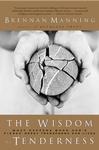
THE WISDOM OF TENDERNESS: What happens when God’s fierce mercy transforms our lives?
By Brennan Manning
HarperSanFrancisco, 2002 (paperback, 2004), 179 pages


The Wisdom of Tenderness


SUMMARY OF THE BOOK

This book turns on one question: “Do I wholeheartedly trust that God likes me?” (p. 17). We have a difficult time with this question, for even when we know God loves us, our attitudes and behaviors show that we probably do not trust his fondness.

Our understanding of ourselves directly corresponds to our understanding of God. If we truly believe that God is our loving Abba, then we truly believe that we are Abba’s loved children. Until we believe this, until our hearts have been touched by God’s tenderness, we will not be truly tender and we will not become mature.

In his fierce mercy, Jesus loves those who admit brokenness and judges those who presume wholeness. Broken persons, touched by Jesus’ fierce mercy, see him in other broken persons and share his mercy with everyone they meet. If Abba’s touch, through Jesus, transforms who we truly are—Abba’s loved children—why then does the reputation of narrowness and bigotry follow so much of Christianity? Why is there so much untouched suffering?

Face-to-face with God’s fierce mercy we see our brokenness in all its despicable glory. There we realize that exposing our brokenness—feeling that shame and fear—is the beginning of accepting God’s tenderness. Beyond that beginning is a clear vision of our own brokenness and a fierce reliance on God’s fondness. Wisdom is realizing God’s incomprehensible power, trusting his irreversible fondness, and then living like it.


USE IN MINISTRY
Ministry is person-to-person. Merely doing the tasks is insufficient because we bring our whole selves as we minister to other whole selves. When ministers deny their brokenness and disguise it with competence, they cheat themselves, they cheat those under their care, and they cheat God. Brennan Manning’s The Wisdom of Tenderness exposes this and points the way to headlong friendship with God. Ministry teams hungering for something beyond duty and responsibility will find in this book a map of the terrain they long for. Those struggling under the weight of brokenness will find in this book a brother pointing to the loving arms of Abba. Those living with the self-deceived presumption of wholeness may find in this book emotional fluff and squishy theology. But the theology is not squishy, nor is the emotion fluffy. Rather, The Wisdom of Tenderness is a portrait of the Abba of Jesus, who loves us so much that he gave his Son for us, and who likes us so much that he desires to spend eternity in our company.

Tag:

Friday, December 10, 2004

THE SEARCH TO BELONG: RETHINKING INTIMACY, COMMUNITY, AND SMALL GROUPS
By Joseph R. Myers © 2003
Pub. emergent/YS and Zondervan
181 pages


the search to belong

With the continuing popularity of small groups as a primary means of developing community, Myers’ book offers an important corrective in our understanding of belonging. By expanding our notion of community and by working to develop nurturing environments rather than programs, we will develop the front porch atmosphere that is required for the natural development of community. Even if one does not agree with all of Myers’ assumptions and conclusions, the book provides an excellent resource for discussion in ministry teams.

Summary

The myths of belonging. While it is assumed that more time, more commitment, more purpose, more personality, more proximity, and more small groups mean more belonging, this is not necessarily the case. The notion of belonging is much more complex. According to the proxemics of Edward T. Hall, belonging takes place in four spaces: public (12 feet +), social (4-12 feet), personal (18 inches to 4 feet), and intimate (0-18 inches). The conversation about belonging must take place in all four spaces.

Longing to belong. Belonging happens when one person feels a connection with another person. This feeling need not be reciprocal. The culture of individualism has made the search to belong more important. The way we speak about belonging must fit the true nature of belonging, because people are finding connection wherever they can get it.

“Give me some space.” We communicate our understanding of belonging by the words we use: family, visitor, guest, etc. Our understanding of belonging is also in our perceptions. For example, while the size of an elevator seems to indicate intimate space, we all know it is public space and act accordingly. We all connect, are committed, and find connections significant in all four spaces, though the means to accomplishing this differs by space. In fact, in order to find harmony we need more public space than social, more social than personal, and very little intimate.

Group chemistry. While churches usually offer opportunities in all four spaces, too often, they communicate a belief that ‘true belonging’ takes place in personal and intimate space. People need to belong in all four spaces and they need to develop competencies in all four spaces. Community happens naturally in all four spaces and is inhibited if forced. The key to creating community is creating environments where community can naturally occur. Community is more chemistry than program design. Start by developing a nurturing environment. Assess effectiveness by hearing stories, not by counting groups and heads.

Trading spaces. A healthy relationship does not stay in one space throughout the lifespan of the relationship. In fact, even in the most intimate relationship of marriage needs belonging in all four spaces to be healthy. Because we need to belong in all four spaces and because every relationship trades spaces at some time, we need to develop skills in transitioning.
Searching for a front porch. A front porch is a median space where we experience social and personal space. Developing a front porch space provides an opportunity for people to court our community rather than simply shop for a community.

What now? Finding harmony. To help your church develop healthy community discover how your church defines community, chart all your groups in the four spaces, and then develop a plan to create a nurturing environment for the space most needing balance.

Tag:

Sunday, July 18, 2004

ADDICTED TO MEDIOCRITY: contemporary Christians and the arts (revised edition)
by Franky Schaeffer
pub. Crossway Books, (C) 1985 (original 1981), 127 pages

Comments: Here's some of his points:
Creativity and communication need no justification. p. 20
Christian art and culture is addicted to mediocrity. p. 23
mediocrity posterboy: Thomas Kinkade (sorry to those who think his work is good art)

Spiritual vs. secular is a false dichotomy. The true dichotomy is NOT sin vs. sin. p. 27
Darwinism brought utilitarianism to the forefront, and so, worth has come to be measured by usefulness. p. 29
The most repeated phrase in the Genesis 1 creation account is “it was good.” People and things have inherent worth and utilitarianism degrades that inherent worth. p. 36
Responses (p. 40-51)
1)Be free from slavery to usefulness
2)Be free from boxed in spirituality that focuses on false dichotomies
3)Resist junk creativity and search out creativity that has integrity.
4)Demand higher standards.
5)Encourage the arts in your midst.
6)Support the arts.

Real spirituality is involved in real life. p. 57
The creative expressions of your “self” praise God. p. 59
If you are a real Christian then it will show in your work. p. 63
Fight evil, yes, but we must also affirm life and goodness. p. 65

Addicted to Mediocrity may be a bit severe, but the message is still all too applicable. Very sad.

Tag:

Tuesday, June 08, 2004

TRAVELING MERCIES: some thoughts on faith
by Anne Lamott
pub. Anchor Books, (C) 1999, 275 pages

Comments: I first heard Anne Lamott at EC03. She was awesome (despite some apparent editing). Here's how she starts (from the Overture, page 3): "My coming to faith did not start with a leap, but rather a series of staggers from wht seemed like one safe place to another..." Anne's book is honest and a bit gritty at times--but honesty wins out over gritty, unless you're a separatist, a la Oberbrunner (see Journey Into Relevance).

Tag:

Tuesday, June 01, 2004

CALLED TO HOLY WORLDLINESS
by Richard J. Mouw
pub. Fortress Press/Laity Exchange Books, (C) 1980, 144 pages

Comments: From the back cover: "Many laypersons sense a call to live as servants of Jesus in areas beyond the institutional church. But questions arise. What resources are available to laity in theology and piety? Are there connectons between evangelism and social action? How can the church equip laity for corporate responsibility? // Addressing these and related inquiries, Richard Mouw offers helpful insight into understanding the biblical foundation for the ministry of the laity. In addition, he develops practical guidelines for applying the gospel to the corporate dimensions of human life." Even though this book is 24 years old, Mouw has good things to say. The first chapter deals with the corporate calling, saying that the church's call flows from the fact that God is creator, that the chuch is one, and that piety is a "cultivation and expression of religious attitudes" in the world. The church is called as a body and each individual must find his or her place in that calling. Chapter two deals with the need for a theology of, for, and by the laity. It is the laity who know their context. They know the questions that theology must answer. Well, that's as far as I've gotten. More later.

Tag:

Tuesday, March 30, 2004

LIFE TOGETHER: The Classic Exploration of Faith in Community
by Dietrich Bonhoeffer, translated by John W. Doberstein
pub. HarperSanFrancisco, (C) 1954, 122 pages

Comments: Written while Bonhoeffer led an underground seminary in Nazi Germany, this little book gives rich and real insight into the church as necessarily a faith community. In chapter one he says, "Christianity means community through Jesus Christ and in Jesus Christ. No Christian community is more or less than this. Whether it be a brief, single encounter or the fellowship of years, Christian community is only this. We belong to one another only through and in Jesus Christ" (p. 21).

Friday, August 22, 2003

TOO DEEP FOR WORDS: Rediscovering Lectio Divina
by Thelma Hall
Pub. Paulist Press, (C) 1988, 110 pages

Comments: excellent book; Thelma Hall offers clear guidance for Lectio Divina as well as 500 scripture texts, sorted by theme, to use in the practice of lectio. Great resource, especially for beginners and dabblers.

Friday, February 07, 2003

THE GODBEARING LIFE: the art of soul tending for youth ministry
by Kenda Creasy Dean and Ron Foster
pub. Upper Room Books, (C) 1998

Comments: highly recommended for anyone in ministry, not just ministry with youth. This book steers clear of the daycare, marketing model and gets downright spiritual.