Monday, January 29, 2007

LISTENING TO THE BELIEFS OF EMERGING CHURCHES
Gen. Ed. Robert Webber
240 pages
Publisher: Zondervan (February 2007)

Spring 2007 reading...more later

SCAN RESULTS
General Editor: Robert Webber is Professor Emeritus of theology at Wheaton and Myers Professor of Ministry at Northern Seminary. His interest in ancient-future worship, and other topics, involves him in the fringes of the emerging church.

This is a “five-views” book wit that standard format. Webber introduces the book, providing a historical context for emerging churches and introduces the contributors and their theologies. Next are chapters by each of the contributors: Mark Driscoll, John Burke, Dan Kimball, Doug Pagitt, and Karen Ward. Each chapter is followed by a response from each of the other contributors. Webber concludes the book, asking three assessment questions (Who are these conversationalists? What are they saying? What do we need to hear) and mentioning some of the dangers that lie ahead.

Webber intends to provide a historical context for understanding the emerging church and to provide space for the reader to hear more accurately, and possibly join in, the emerging conversation.

UPDATE: 020107 scan results added

Tag:
THE COMPLEX CHRIST
Kester Brewin
192 pages
Publisher: SPCK Publishing (August 23, 2004)


Spring 2007 reading...more later

SCAN RESULTS

Kester Brewin is an academic in urban London and writes on education. He was involved in Vaux.

The book has two parts and an interlude. Part one discusses the complex Christ in relation to advent, incarnation, and emergence. The Interlude describes the character of the emergent church. Part two discusses the complex Christ in relation to the city, gift, and dirt.

Brewin intends to show the essential need for systemic ecclesial change through the application of empowerment and the science of emergence.

UPDATE 020107 scan results added

Tag:
LESSLIE NEWBIGIN: Missionary Theologian: a Reader
Lesslie Newbigin
Compiled by: Paul Weston
277 pages
Publisher: Wm. B. Eerdmans Publishing Company (March 30, 2006)


Spring 2007 reading...more later

SCAN RESULTS

Author: Lesslie Newbigin brings to this work his experience as a pastor, missionary, theologian, ecumenical statesman, and writer. He is a visionary thinker who applies wisdom to experience. His writing is Christ-centered, Trinitarian framework, biblical, and missionally-informed.

Compiler: Paul Weston is a tutor in homiletics and mission studies at Cambridge. He has researched Newbigin extensively. From Weston’s perspective, Newbigin’s whole body of work speaks still today and ought to be heard.

After a 13-page biography, the work is divided into two parts. Part one introduces Newbigin’s theological foundations for mission and includes extracts from his early works. Part two introduces Newbigin’s thoughts on missionary theology in practice and includes extracts from his later works. Each chapter or part-chapter has an introduction and recommended readings by Weston.

Weston intends “…to introduce the thinking of Lesslie Newbigin to a larger audience by making available extracts from a wide variety of his writings” (p.vii).

UPDATE 020107 scan results added

Tag:
THE OPEN SECRET: an introduction to the theology of mission
Lesslie Newbigin
200 pages
Publisher: Wm. B. Eerdmans Publishing Company; Revised edition (February 1995)


Spring 2007 reading...more later

SCAN RESULTS

Author: Lesslie Newbigin brings to this work his experience as a pastor, missionary, theologian, ecumenical statesman, and writer. He is a visionary thinker who applies wisdom to experience. His writing is Christ-centered, Trinitarian framework, biblical, and missionally-informed.

Chapter 1 provides background for this discussion of theology of mission. Chapters 2-6 place the authority of mission clearly in the missio Dei and within a Trinitarian framework. Chapters 7-10 provide practical applications and implications for the Trinitarian framework.

Newbigin intends to bring “…contemporary concerns in mission theology to a wide audience…to lead the church to embrace its Christ-given task of presenting the gospel to our complex post-modern world.” This is an introduction to the study of missiology.

UPDATE 020107 scan results added

Tag:
THE GOSPEL IN A PLURALIST SOCIETY
Lesslie Newbigin
255 pages
Publisher: Wm. B. Eerdmans Publishing Company (December 1989)


Spring 2007 reading...more later

SCAN RESULTS

Author: Lesslie Newbigin brings to this work his experience as a pastor, missionary, theologian, ecumenical statesman, and writer. He is a visionary thinker who applies wisdom to experience. His writing is Christ-centered, Trinitarian framework, biblical, and missionally-informed.

The book is a series of lectures. Chapters 1-5 discuss the roots of the crisis in Christian confidence using ideas from Polanyi. Otherwise, the organization is unclear.

Newbigin calls for a renewed confidence in the gospel of Jesus Christ in the context of pluralism. He sets forth ways to engage the culture while remaining clearly Christian.

UPDATE 020107 scan results added

Tag:
FOOLISHNESS TO THE GREEKS
Lesslie Newbigin
160 pages
Publisher: Wm. B. Eerdmans Publishing Company (April 1986)


Spring 2007 reading...more later

SCAN RESULTS

Author: Lesslie Newbigin brings to this work his experience as a pastor, missionary, theologian, ecumenical statesman, and writer. He is a visionary thinker who applies wisdom to experience. His writing is Christ-centered, Trinitarian framework, biblical, and missionally-informed.

Chapters 1-2 describe post-enlightenment culture. Chapters 3-5 describe the gospel and its missionary encounter with culture. Chapter 6 discusses implications and applications for missionary encounter..

Newbigin’s intention: (p.1) “My purpose in these chapters is to consider what would be involved in a genuinely missionary encounter between the gospel and the culture that is shared by the peoples of Europe and North America, their colonial and cultural off-shoots, and the growing company of educated leaders in the cities of the world…”

UPDATE 020107 scan results added

Tag:

Saturday, January 20, 2007

IN SEARCH OF AUTHENTIC FAITH
how emerging generations are transforming the church
Steve Rabey
224 pages
WaterBrook Press; 1st edition (January 16, 2001)


In Search of Authentic Faith is a journalistic exploration and profile of the churches and ministries emerging in postmodern USA. Rabey intends "to provide an intriguing and inspiring guide that contributes to the renewal of the church by surveying hundreds of churches and ministries" (pg 12).

Thesis: The emerging church is the most recent generational-cultural modification of the church.

Part one explores the larger postmodern cultural context. Part two explores the emerging values of emerging churches and ministries. Part three explores the responses of organizations and leaders to these ecclesiastical changes.

There are some end notes, but no bibliography or indexes.

Tag:
HOUSES THAT CHANGE THE WORLD
Wolfgang Simson
316 pages
Paternoster Publishing (March 6, 2001)


Houses That Change the World is an argument for house churches as basic ecclesiology. Through an investigation of the nature, structure, and functioning of house churches, Simson intends to make a case for the structural reformation of the church to house church.

Thesis: The house church is God's intended ecclesial structure and is the most efficient and effective means of fulfilling the command to go make disciples of all nations.

Chapters 1-2 argue that house church design is basic, yet throughout history it has been opposed. Chapters 3-5 describe house church as family-centered, neighborhood-based, organic, and natural. Chapters 6-11 contend that planting and developing house churches requires that apostles and prophets behave as such.

The "Suggested Materials" section is small (2 pgs), though helpful. An index, bibliography, and footnotes would increase the usefulness of this text.

NOTE: As with the books by Robert Banks (here and here), Simson's book seems to allow the argument to cloud rather than explicate biblical data. There seems to be an agenda.

Tag:
THE CHURCH IN GOD'S PROGRAM
Robert L. Saucy
256 pages
Moody Publishers (August 21, 1981)


This is a systematic theology, exploring the biblical data on the nature and purpose of the church. Saucy encourages the readers' examination of the biblical data regarding the universal and local church.

Thesis: The Bible reveals, not specific details, but principles-guidelines-patterns regarding the nature and purpose of the universal and local church. Each specific instance of church is shaped by history and culture.

Chapters 1-5 concern the universal church. Chapter one discusses the meaning and uses of the English word "church" and the Greek word "ekklesia". Chapters two and three explore the nature of the church as seen in the New Testament images of the church. Chapter four argues for the inauguration of the church by God on Pentecost, founded upon Christ by means of the Holy Spirit. Chapter five explores the functioning of the church in God's overall program.

Chapters 6-9 concern the local church. These chapters explore the biblical data on organization, ministry, worship, and baptism and communion.

There is a categorized bibliography with significant works noted and subject and passage indexes. There is no author index.

Tag:
CHURCH ON THE OTHER SIDE
Brian McLaren
240 pages
Zondervan; New, Expanded Ed edition (January 1, 2003)


This strategic, practical-ministry book, McLaren suggest thirteen strategies for doing ministry in postmodern culture.

Thesis: Postmodern culture requires Christians to do ministry differently.

  1. maximize discontinuity
  2. redefine your missions
  3. practice systems thinking
  4. trade up your traditions for tradition
  5. resurrect theology as art and science
  6. design a new apologetic
  7. learn a new rhetoric
  8. abandon structures as they are outgrown
  9. save the leaders
  10. subsume missions in mission
  11. look ahead, further ahead
  12. enter the postmodern world
  13. add to this list
The appendix includes exercises to help the reader implement the strategies. There are reference and explanatory end notes, but no index.

Tag:
PHILOSOPHY AND THEOLOGY
John D. Caputo
84 pages
Abingdon Press (April 2006)


In this essay, Caputo intends to convince the reader that philosophy and theology function together in the search for ultimates. He accomplishes this by reviewing modernity's exacerbation of the alleged conflict between the two, and by breaking down the wall between the two with deconstruction and reconstruction.

Thesis: The co-functioning of philosophy and theology is seen in the long history of relationship, behind the conflict exacerbated by modernity, and within the sometimes hampered co-functioning.

Caputo states each of four theses then develops and supports each through one or more essay chapters.
  1. "And" is the most important word in the phrase "philosophy and theology" (chapter 1, stated on page 3).
  2. Modernity exacerbated the difference between philosophy and theology (chapters 2-5, stated on page 10).
  3. Philosophy and theology are two kinds of faith (chapters 6-7, stated on page 57).
  4. Philosophy and theology are different, yet companion ways (chapter 8, stated on page 69).
There are two pages of notes, primarily providing a few background discussions. Most helpful are eight pages of short biographies of the philosophers and theologians discussed in the essay.

Tag:
WHAT ARE SPIRITUAL GIFTS?
Rethinking the Conventional View
Kenneth Berding
368 pages
Kregel Publications (October 27, 2006)


Berding puts forth a primarily exegetical argument for all thinking Christians, in order to provide a biblical understanding of so-called "spiritual gifts" in contrast to the conventional "abilities" notion. He makes a case for spiritual ministries through the exegesis of key New Testament passages.

Thesis: Charisma and pneumatika ought to be understood primarily as spiritual-ministries rather than as spiritual-abilities.

Chapters 1-3 present the basic ideas via a hypothetical spiritual gifts seminar. Chapters 4-6 discuss word meaning and its use. Chapter ) discusses Paul's concern for ministry. Chapter 8 discusses the nature of biblical lists. Chapters 9-12 exegete the four key passages (Ephesians 4:11-12; Romans 12:6-8; 1 Corinthians 12:28-20; and 1 Corinthians 12:8-10). Chapter 13 discusses Paul's use of "grace" and "given". Chapter 14 addresses four potential objections ("the language of given-ness and having, the issue of talents, English usage of the word gift, and the role of 1 Corinthians 12:8-10" p133). Chapters 15-18 place "ministries" in the context of four broad Pauline themes. Finally, chapters 19-23 explain the implications of the thesis and make recommendations.

Those seeking to go deeper will find ample end notes and four supporting appendixes. Subject and Scripture indexes are included.

Tag:

Monday, September 11, 2006

The Church Comes Home
By Robert and Julia Banks
Hendrickson Publishers, 1998
260 pages

Thesis (subject to correction):

The full experience of church only occurs as both home church and whole (city-wide) church gatherings are practiced.


Tag:

Sunday, August 27, 2006

MISSIONAL CHURCH: a vision for the sending of the church in North America
edited by Darrell L. Guder
Authors: Lois Barrett, Inagrace T. Dietterich, George R. Hunsberger, Alan J. Roxburgh, Craig Van Gelder
Grand Rapids: William B. Eerdmans Pub, (C) 1998


After describing the cultural and historical context of the North American church, Missional Church lays out a theological framework built on a biblical understanding of church and describes a missional identity and practice built on that theological framework.

This book is most worthy of a much deeper reading than was possible in this initial read.


Tag:
GOING TO CHURCH IN THE FIRST CENTURY
By Robert Banks
Seedsowers, © 1980, 48 pages

This well-researched piece of historical fiction paints a compelling picture of the first-century house church. The gathering, centered on a meal and conversation, is a transformation of a standard cultural form, clearly a part of its culture (Rome) yet having a distinct focus (Jesus).

Leaders from house church to mega church should consider how to integrate this much-needed form into local church ministry.


Tag:

Thursday, August 24, 2006

Paul's Idea of Community, Revised Edition
by Robert Banks
Hendrickson Publishers, (C)1994 (5th printing 2004)
233 pages


In this book, Robert Banks investigates Paul’s understanding of community, the historical-cultural context of this understanding, and the process of Paul’s thinking on community. Special attention is given to application in current practice.


Tag:

Saturday, July 22, 2006

AN INTRODUCTION TO ECCLESIOLOGY
by Veli-Matti Karkkainen
pub. Intervarsity Press, (C) 2002, 238 pages

Update: reread in July 2006, see GLEANINGS FROM KARKKAINEN

Comments:

In this book, Karkkainen surveys seven ecclesiological traditions, seven contemporary ecclesiologists, and seven contextual ecclesiologies. Part one covers the ecclesiological traditions: orthodox, roman catholic, Lutheran, reformed, Free Church, Pentecostal/charismatic, and ecumenical. Part two covers John Zizioulas, Hans Kung, Wolfhart Pannenberg, Jurgen Moltmann, Miroslav Volf, James McClendon Jr., and Lesslie Newbigen. Finally, part two covers the non-church movement in Asia the base ecclesial movement in Latin America, the feminist church, the African Independent Church, the Shepherding movement, the world church, and the post-Christian church.

Needless to say, the book covers a world in its 238 pages. Given this it is an especially profitable book for anyone who has concentrated on their own tradition's view of church. I leave my reading of this book with a most important notion: the church is simpler, more complicated, more universal, and more local that we can imagine. Realizing that not all ecclesiologies can be right (for indeed, some notions truly are mutually exclusive), every ecclesiology can undergo important correction by listening to other voices. After all, individuals--and indeed communities can only see from their own perspectives and require other voices to see the whole picture. Karkkainen provides an excellent introduction to the world of the various voices.


Tag:

Tuesday, July 18, 2006

Dracula (The Collector's Library)
Bram Stoker, Jonty Claypole (Afterword)

This is first on my summer reading list. Hopefully, summer starts May 22, but that depends on when I finish my paper...

Update: summer officially starts at 5:30 pm, May 24. Not bad.

Update (7/18): I finished Dracula last week. Much like Frankenstein and Jekyl/Hyde, this book sheds light on sin and the human condition. The format is interesting: the entire book is written as the journal entries of the main characters (along with a few articles/letters). The book is long and not for the faint of heart, but for anyone who studies humanity and culture, it is a must read.

Details:
Format: Hardcover, 526pp
Pub. Date: September 2003
Publisher: Barnes & Noble Books
Edition Description: Complete and Unabridged Edition


Tag:

Monday, July 10, 2006

HOW TO THINK THEOLOGICALLY
By Howard W. Stone and James O. Duke
Fortress Press, Minneapolis, 1996
128 pp. (Glossary, Index)

Presupposition: Every Christian is a theologian and should learn to do theology intentionally and well (p2).

This book describes and discusses the processes involved in theological reflection. Theological reflection is a conversation already in progress and it will continue after we are done. It is “…a matter of personalized conversational thinking about shared convictions” (p7). It is the act of caring about what we believe about the Christian message.


Tag:

Monday, May 29, 2006

Active Learning: 101 Strategies to Teach Any Subject (Paperback)
by Mel Silberman
Paperback: 189 pages
Publisher: Allyn & Bacon; 1 edition (February 20, 1996)

Excellent resource with theoretical grounding and clear instructions for in-class implementation. What it does not have is time. Time is a necessary ingredient because students who have not participated in active learning often have a bit of culture shock. If you teach adults or 'near adults' this text is an excellent resource.

Tag:

Monday, January 23, 2006


EVANGELICAL THEOLOGY: AN INTRODUCTION
by Karl Barth
Wm. B. Eerdmans Publishing Company (2000), 206 pages


January 2006 reading:
I may just read this book once a year. In one week I will be starting a Master of Theology at Talbot School of Theology, Biola University. while I have MUCH to learn about systematic theology, reading this book has provided a most necessary perspective. Barth emphasizes over and over that theology is a modest, free, critical, and happy science. He also majorly camps onthe notion that if God is not the clear and absolute center of theology, then we are not doing theology. God himself--in his person, not mere ideas about him--is the source, basis, sustainer, and judge of theology. Theology itself is merely an ever-changing human expression of what we understand about God--it is necessarily imperfect and will always be so.

Someday I'll write a proper review of this book.

July 2005 reading:
I'm just about done reading this. First, I wish Talbot required this for an introductory theology class. Second, if you do theology of any kind, you must read it. Third, don't believe everything you hear about Barth. Read Barth and make up your own mind.

In this short book--a series of lectures given in America in 1962--Barth leads us through the place of theology, theological existence, the threat to theology, and theological work. The honesty, passion, strength, and wisdom of this book is beyond words. As I read it, I realize that despite all else I may do, I am a theologian, and I had better come to grips with that, because it is both a hard and an amazing life to live.

Tag:

Friday, January 06, 2006

SPRING 2006 TEXTBOOKS

TTTH806 Contemporary Theology

20Th-Century Theology: God and the World in a Transitional Age (Paperback)
by Stanley J. Grenz, Roger E. Olson
Paperback: 393 pages
Publisher: InterVarsity Press (January 1, 1997)

Skim Notes: Grenz and Olson intend to guide the readers through what they perceive to be the main current of theology for the twentieth century. It is not a synopsis of thinkers and their thoughts but a story of theology in a transitional age. They offer an interpretive tool: the tension between divine transcendence and divine immanence.

Modern Theologians: An Introduction to Christian Theology in the Twentieth Century (Paperback)
by David Ford (Editor), Rachel Muers (Editor)
Paperback: 819 pages
Publisher: Blackwell Publishers; 3rd edition (August 15, 2005)

Skim Notes: Ford and Muers intend this book to be used is to “…prepare for, accompany, and aid reflection on the study of texts” (viii).


Christianity And The Postmodern Turn: Six Views (Paperback)by Myron B. Penner (Editor)
Paperback: 240 pages
Publisher: Brazos Press (July 1, 2005)

Skim Notes: Penner and the contributors intend to "...provide Christians a clear introduction to the issues of concern precipitated by the postmodern turn in philosophy and, hopefully, to remove some of the confusion surrounding these concerns” (15). This book provides a forum for the two sides to speak with each other rather than past each other. The essays reflect a range of interpretations of and responses to the postmodern turn.


TTCE724 Advanced Methods of Educational Instruction


Active Learning: 101 Strategies to Teach Any Subject (Paperback)
by Mel Silberman
Paperback: 189 pages
Publisher: Allyn & Bacon; 1 edition (February 20, 1996)

Skim Notes: Silberman intends to provide specific, practical strategies designed to enliven the classroom, deepen learning, and deepen retention. He gives concrete advice on how to install active learning in any classroom.


Basics of Teaching for Christians: Preparation, Instruction, and Evaluation (Paperback)
by Robert W. Pazmino
Paperback: 124 pages
Publisher: Baker Book House (July 1, 1998)

Skim Notes: Pazmino presents teaching for Christians as a ministry in partnership with God and having Christian distinctives. He explores teaching in three phases: planning, implementing, and evaluating. His underlying metaphor is “…artfully setting an inviting table that welcomes all to participate and results in joyous celebration’ (11).


The Craft of Teaching : A Guide to Mastering the Professor's Art

(Paperback)
by Kenneth E. Eble
Paperback: 272 pages
Publisher: Jossey-Bass; 2 edition (March 4, 1994)

Skim Notes: Eble focuses on teaching. He says that “…what underlies teaching is the unquenchable human desire to learn. Responding to that desire, wherever and whatever one teaches, is reason enough for working at one’s craft” (xii).


Mckeachie's Teaching Tips: Strategies, Research And Theory for College And University Teachers (Paperback)


by Wilbert J. McKeachie, Marilla Svinicki
Paperback: 407 pages
Publisher: Houghton Mifflin; 12th edition (August 1, 2005)

Skim Notes: In this twelth edition, McKeachie and Svinicki present teaching tips supported by discussion of relevant research and theory. They stress learner centered teaching and suggest strategies to consider and modify as needed.


Tag:

Saturday, December 31, 2005

THE BODY-SNATCHERS (pages 96-124)
in THE STRANGE CASE OF DR JEKYLL AND MR HYDE and other stories
by Robert Louis Stevenson
Barnes & Noble, (C) 2004, 311pp
This story is true horror. The twist does not happen until the very last word of the story (so, if this is your first read, DON'T PEAK!). The best thing is the lingering question: What made the difference in the reactions of Fettes and Macfarlane? Makes me wish I had read this as part of a reading group; this would be a great discussion topic.

Tag:

Monday, December 26, 2005

THE SEVEN LAWS OF TEACHING

by John Milton Gregory
Originally published in 1884
Revised in 1917
Paperback version, 2004 Baker Books
121 pages


In 121 pages, Gregory intends for his readers to see the leading principles and rules of the teaching art groups around seven factors, and that the readers may methodically learn and use them. There are seven laws (pp. 18-19):
  1. A teacher must be one who knows the lesson or truth or art to be taught.
  2. A learner is one who attends with interest to the lesson.
  3. The language used as a medium between teacher and learner must be common to both.
  4. The lesson to be mastered must be explicable in the terms of truth already known by the learner--the unknown must be explained by means of the known.
  5. Teaching is arousing and using the pupil's mind to grasp the desired thought or to master the desired art.
  6. Learning is thinking into one's own understanding a new idea or truth or working into habit a new art or skill.
  7. The test and proof of teaching done--the finishing and fastening process--must be a reviewing, rethinking, reknowing, reproducing, and applying of the material that has been taught, the knowledge and ideals and arts that have been communicated.
In eight chapters, Gregory explains the idea of the laws and the philosophy, rules, and violations for each of the seven laws. If you teach or if you learn, this small volume is highly recommended. Despite its obvious basis in modernist thought, it remains a classic about teaching and learning.

Tag:

Wednesday, November 23, 2005

TOWARD AN OLD TESTAMENT THEOLOGY by Dr. Walter C. Kaiser, Jr.
Zondervan (September 13, 1991) 303 pages

In his book, Toward an Old Testament Theology, Kaiser wants to establish ‘promise’ as the central message of the OT and to build an exegetically useful OT Theology around that core message. He makes his case in three parts: (1) Definition and Method, (2) Materials for an Old Testament Theology, and (3) The Connection with New Testament Theology. This critique describes the function of each part, briefly discusses difficulties raised by each, and discusses how well the text achieves its intended purpose.

In Part 1, Definition and Method, Kaiser lays out the bulk of his theology, making a case for the notion of ‘promise’ as the exegetically-derived center around which an OT Theology can be built. Following the analogy of antecedent scripture, he traces OT history around the theological core of ‘promise.’ According to Kaiser, the structure of an OT Theology is “…historically arranged and its content is exegetically controlled” (Kaiser, 9). He further says that “… biblical theology draws its very structure of approach from the historic progression of the text and its theological selection and conclusions from those found in the canonical focus” (Kaiser, 12).

Two difficulties are raised by this section. First, while Kaiser’s theology appears to be based on an exegesis of Scripture, there is a greater focus on the history behind the text than on the text itself. While he looks closely at Genesis 3:15; 9:25-27; 12:1-4, his own words (as in the quote from page 12, above) betray his reliance on history and chronology. Second, while the idea of the analogy of antecedent scripture is valid, there are problems. Often the date a book was written is unclear or unknown. This makes it impossible to determine which book is indeed antecedent and places any theological conclusions on an insecure foundation. In addition, claims regarding inter-textuality should be based on clear, intentional references within the text rather than on a supposed chronology. The text is the only clear revelation in our possession.

In Part 2, Materials for an Old Testament Theology, Kaiser traces the development of the theological core (promise) across the OT. He wants to show that in each historical era, God reveals and develops the message of promise. By exegeting key passages in each era, he traces the development of the promise theme across OT history.

Three difficulties are raised by this section. First, the ‘eras’ are not clearly related to canonical structure. For example, Kaiser divides the Pentateuch (a multi-volume book written by one author) into three separate eras. Second, it is not clear whether this OT Theology is indeed exegetically useful. He carefully handles a number of key passages, but generally neglects the larger context of books and of the canon. A determination of usefulness would need to be determined in practice. Finally, in some eras (e.g. the Sapiential era), the core promise message seems to be stretched. If ‘promise’ truly is the intended center of the OT, then it should fit comfortably into every book of the OT. This does not seem to be the case.

In Part 3, The Connection with New Testament Theology, Kaiser connects the OT promise with the NT fulfillment in Christ. He wants to show that the promise—around which the OT and an OT Theology is built—is fulfilled in Jesus Christ and his new covenant.

An important difficulty is raised by this section. The problem is reading subsequent scripture back into antecedent scripture. Kaiser seems to be interpreting the OT according to NT thinking rather than allowing the OT to explain itself.

How well does Kaiser establish ‘promise’ as the central message of the OT and build an exegetically useful OT Theology around that core message? First, while much effort is expended in making a case for promise as the central message of the OT, in the end it appears to be based more upon reading the NT back into the OT. ‘Promise’ is an important theme, but his argument does not meet the requirement for a core message. The difficulties of uneasy fit in some eras, the reliance on a few key passages, and the apparent reliance on the NT are not adequately dealt with.

Second, for certain key passage, Kaiser’s theology may be exegetically useful, but for the canon it does not seem particularly useful. He does not deal with the OT canon as it stands, but with a chronological reconstruction of the events behind the text.

Despite these difficulties, Toward an Old Testament Theology is an important book, moving OT Theology away from the history of religions school and closer to an exegetically based theology of the text.


Tag:

Wednesday, August 03, 2005

FALL 2005... the final readings for the Master of Divinity (yup, I graduated in December 2005!!)

Rev. 121705


BIBLICAL THEOLOGY by Geerhardus Vos

Banner of Truth (December 1, 1996)


Ended up only skimming this one (time crunch). It is on the docket for next summer.


INTRO TO OLD TESTAMENT THEOLOGY by Dr. John H. Sailhamer
Zondervan (May 1, 1995)


Sailhamer's approach to the OT (especially the Pentateuch) respects the text in a way that few OT theologies do. I need another read to decide whether I am convinced of his conclusions, but if you are studying or teaching the OT, you must read this book. His focus on structure and intertextuality is invaluable.


TOWARD AN OLD TESTAMENT THEOLOGY by Dr. Walter C. Kaiser, Jr.

Zondervan (September 13, 1991)


see the review


EPHESIANS:EXEGETICAL COMMENTARY by Harold W. Hoehner
Baker Academic (January 1, 2003)


Helpful, but huge. His footnotes are amazing. Still... three inches for six chapters seems like a lot.


MESSAGE OF EPHESIANS by John R.W. Stott

InterVarsity Press (June 1, 1979)


Ended up not using this one very much. It is very good, though, and has a pastoral tone that helps in application and practical thinking.


POWER AND MAGIC by Clinton E. Arnold
Wipf & Stock Publishers (December, 2001)


Indepth discussion of the setting of Ephesians. Arnold's extensive study of the magical papyri gives great insight into Paul's letter to the Ephesians.


ZONDERVAN ILLUSTRATED COMMENTARY V3. ROM-PHILEM by Clinton E. Arnold
Zondervan (August 1, 2002)


Extremely useful for studying the backgrounds of a book/passage. Use it wisely, though; it is a help not the Word.


BIBLEWORKS 6.0


[not exactly a "reading" but I'm quite sure Dr. Arnold will press this into service in a major way...]

I still like Logos for its Library features, but BibleWorks definitely ranks in original language exegesis.

Tag:

Tuesday, July 19, 2005

MESSY SPIRITUALITY by Michael Yaconelli
Hardcover: 144 pages
Publisher: Zondervan (March 1, 2002)

I read this book early in the Spring 2005 semester at Talbot and read thru it soon after with the collegians at TFB. Frankly, it was like a kick in the head and a deep drink of cool water all at the same time.

Tag:
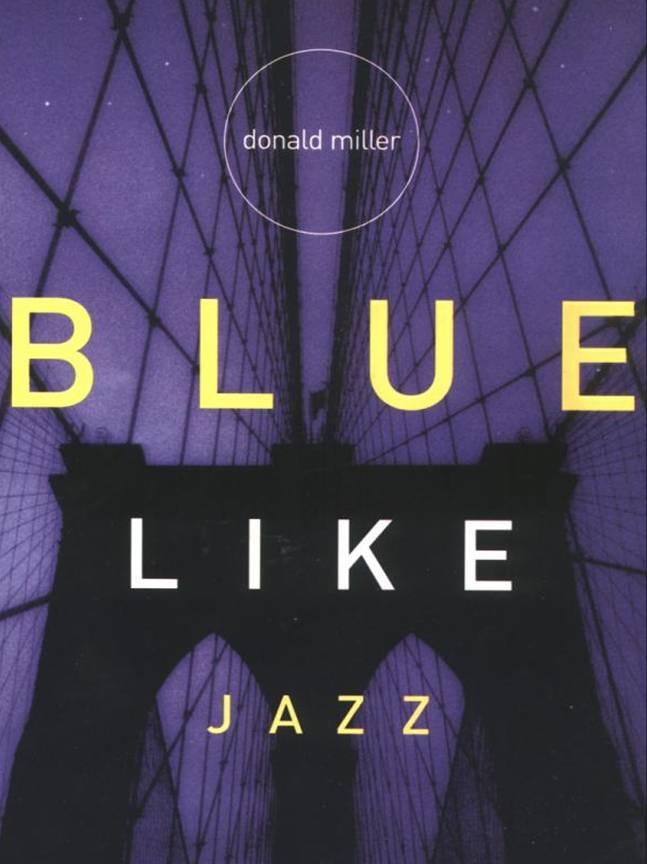
BLUE LIKE JAZZ by Donald Miller
Paperback: 256 pages
Publisher: Nelson Books (July 17, 2003)

On the back cover a quote from Christianity Today says Donald Miller is "Anne Lamott with testosterone..." Yup. This book joins Traveling Mercies by Anne Lamott, Messy Spirituality by Mike Yaconelli (which for some bizarre reason I forgot to blog), and The Wisdom of Tenderness by Brennan Manning, have done more to adjust my spiritual perspective than any other books I have read--and that is saying a lot. While I still have much to learn, Blue Like Jazz, and the other books, have opened my eyes to grace and passion and have shed much needed light on dutiful conformance.

Tag:

Wednesday, June 15, 2005

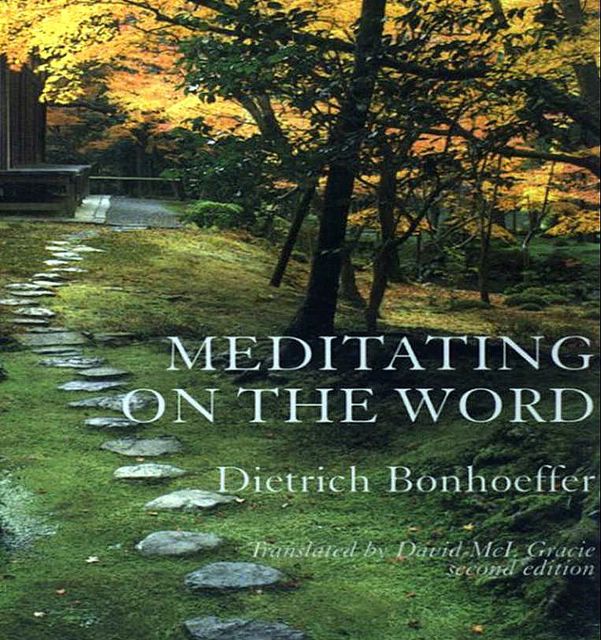
MEDITATING ON THE WORD by Dietrich Bonhoeffer


This is a collection of various short writings from Bonhoeffer, all revolving around his interactions with Scripture. Reading this book was the impetus for my Psalm 119 meditation project. I realized while reading it that my personal, meditative interactions with Scripture were too infrequent and too shallow. Great stuff from Bonhoeffer, as always.

Tag:
PERSPECTIVES by Colin Creel
Relevant Books, (C) 2005, 174pp


I'm about in the middle of this right now. Excellent discussion resource for College or Twentysomething ministry. There are questions for each short chapter and a pdf study guide available at Relevant Books

Tag:
THE STRANGE CASE OF DR. JEKYLL AND MR. HYDE
by Robert Louis Stevenson
Barnes & Noble, (C) 2004, 311pp


Like Frankenstein, Jekyll and Hyde is a good study of human depravity, especially the results of giving in to temptation to "work it out of your system". Jekyll sad end reveals the folly of such a notion. I do recommend the book, but it can be a bit slow at times and, if you've seen a movie version, the sequence in the book might throw you off a bit.

Tag:

Tuesday, June 07, 2005

FRANKENSTEIN, by Mary Shelley.

Barnes & Noble Collector's Library edition... a mere $4.95

I've seen lots of Frankenstein movies--some good, some too bad for words, but not to match the book. I've no formal response. Frankly, the book is so rich in theological anthropology and hamartiology that it should be required reading for systematic theology. I may read it again in a few months... maybe to transition back into fall. Not sure. I do know that Mary Shelley is an amazing writer. I know that this book is highly recommended (given that you forget every movie version you ever saw). Her plot development is so subtle it'll drive you nuts. The images are rich. Well worth the time--even for those who do not normally read fiction.

Tag:

Tuesday, May 03, 2005

THE WISDOM OF TENDERNESS: What happens when God’s fierce mercy transforms our lives?
By Brennan Manning
HarperSanFrancisco, 2002 (paperback, 2004), 179 pages


The Wisdom of Tenderness


SUMMARY OF THE BOOK

This book turns on one question: “Do I wholeheartedly trust that God likes me?” (p. 17). We have a difficult time with this question, for even when we know God loves us, our attitudes and behaviors show that we probably do not trust his fondness.

Our understanding of ourselves directly corresponds to our understanding of God. If we truly believe that God is our loving Abba, then we truly believe that we are Abba’s loved children. Until we believe this, until our hearts have been touched by God’s tenderness, we will not be truly tender and we will not become mature.

In his fierce mercy, Jesus loves those who admit brokenness and judges those who presume wholeness. Broken persons, touched by Jesus’ fierce mercy, see him in other broken persons and share his mercy with everyone they meet. If Abba’s touch, through Jesus, transforms who we truly are—Abba’s loved children—why then does the reputation of narrowness and bigotry follow so much of Christianity? Why is there so much untouched suffering?

Face-to-face with God’s fierce mercy we see our brokenness in all its despicable glory. There we realize that exposing our brokenness—feeling that shame and fear—is the beginning of accepting God’s tenderness. Beyond that beginning is a clear vision of our own brokenness and a fierce reliance on God’s fondness. Wisdom is realizing God’s incomprehensible power, trusting his irreversible fondness, and then living like it.


USE IN MINISTRY
Ministry is person-to-person. Merely doing the tasks is insufficient because we bring our whole selves as we minister to other whole selves. When ministers deny their brokenness and disguise it with competence, they cheat themselves, they cheat those under their care, and they cheat God. Brennan Manning’s The Wisdom of Tenderness exposes this and points the way to headlong friendship with God. Ministry teams hungering for something beyond duty and responsibility will find in this book a map of the terrain they long for. Those struggling under the weight of brokenness will find in this book a brother pointing to the loving arms of Abba. Those living with the self-deceived presumption of wholeness may find in this book emotional fluff and squishy theology. But the theology is not squishy, nor is the emotion fluffy. Rather, The Wisdom of Tenderness is a portrait of the Abba of Jesus, who loves us so much that he gave his Son for us, and who likes us so much that he desires to spend eternity in our company.

Tag:

Monday, February 07, 2005

HOLY THE FIRM
by Annie Dillard (C) 1998
Pub: Perennial, 80 pages


Holy the Firm

Read it for the language alone. Beautiful. Check out an excerpt here.

Tag:

Thursday, January 27, 2005

EXPERIENTIAL STORYTELLING
by Mark Miller,
© 2003
pub. Zondervan's emergent/ys, 176 pages


Experiential Storytelling

In 148 pages of theory, inspiration, and practical instruction, Mark Miller challenges his readers to do something quite scandalous: trust the Holy Spirit to guide people to truth. Now you—like me—may be thinking, “I trust the Holy Spirit to teach,” but frankly, we teachers do an awful lot of explaining, obvious illustrating, and tidy summarizing. But God doesn’t teach that way very often. Most of the time, God took his people, plopped them in the middle of a situation, and allowed them to figure stuff out (in fact, Jesus got perturbed with his disciples when they were unable to figure stuff out). Experiential Storytelling describes the theory and practice behind the Jesus Journey, a weekend retreat where participants are plopped into the story of God and allowed to figure stuff out. Miller does not suggest—nor do I suggest—that we should eliminate didactic methods.

Having taught bible study and Sunday School for over two decades, I am not afraid to report that quite often neither I nor my students really “get it.” Learning involves mind, will, and emotion—the whole self—and type of storytelling described in Miller’s book is a learning experience that may actually be a learning experience.


If you preach or teach anyone about God, read the book, read it with your team, and then give it a whirl. That’s my plan… I’ll let you know how it goes.

Tag:

Tuesday, January 25, 2005

SPRING 2005 textbooks

A mere $88 later, and I’ve acquired most of the reading for the Spring term (there’s always “reserves” in the library—basically, articles and chapters they don’t want to charge us for but which end up costing an arm and a leg in copy costs… erg). I start skimming today or tomorrow, then reading in earnest Wednesday. Any opinions on the books are welcome.

The Next Generation Leader: 5 Essentials for Those Who Will Shape the Future
by Andy Stanley © 2003
pub. Multnomah Publishers, 165 pages

The Power of Small Groups in Christian Education
By Harley Atkinson © 2002
pub. Evangel Publishing House, 352 Pages

CE: The Heritage of Christian Education
by Estep, James Jr et al, © 2003
pub. College Press, 350 pages

God Our Teacher: Theological Basics in Christian Education
by Robert W. Pazmino, © 2001
pub. Baker Books, 208 pages


Philosophy and Education: An Introduction in Christian Perspective, 3rd Edition
by George R. Knight, © 1980
pub. Andrews University Press, 266 pages


Tag:

Thursday, January 13, 2005

REIMAGINING SPIRITUAL FORMATION: A week in the life of an experimental church
by Doug Pagitt
(C) 2003
Pub. emergent ys, 176 pages


Reimagining Spiritual Formation

We've all heard of "spiritual formation." But does this terminology artificially divide the human person? What does formation look like if it's human formation rather than spiritual formation? Pagitt's book provides a glimpse into the life of one faith community--Solomon's Porch--that works at making spiritual formation human formation. The most impressive thing about this book is the look inside theologically thinking about church in indigenous ways. The stories made me thirsty for more. It's a quick read and a long think.

BTW, there is a book club for Reimagining Spiritual Formation at the Emergent Convention in SD, so if you're reading and you're going, I may see you there.

Tag:

Monday, January 10, 2005

THE COFFEEHOUSE GOSPEL: sharing your faith in everyday conversation
by Matthew Paul Turner
(C) 2004
Pub by Relevant Books, 161 pages


Coffee House Gospel

I'm in the process of reading this and preparing a lesson series for the TFB College Ministry. I did an initial skim and can give this a provisional two-thumbs-up.

Here's a bit from page 22:

Although I believe it's a calling from God to share my faith in the everyday, I also believe He's given all of us a personal story to share--stories that simply show non-Christians many different pictures of the grace of Christ. These life stories are real circumstances that can simply give an individual who is lost a different perspective on eternal truths, pasions, and life.

Frankly, I'm one of those with a desire to share my faith on a regular basis, but who regularly uses the I-work-in-a-Christian-environment-and-don't-know-any-non-Christians excuse. Yeah, like there's no lost people at Starbucks or on the train. Right... The book already pinches.

Tag:

Monday, January 03, 2005

RECLAIMING GOD'S ORIGINAL INTENT FOR THE CHURCH
by Wes Roberts and Glenn Marshall (C)2001
Pub. Navpress
192 pages


Reclaiming God's Original Intent for the Church


Blurb from Navpress:

The early church started as a fringe, radical movement; today the church has become a large, bureaucratic institution. In the process, the modern church has lost much of its focus, power, and original intent—which has slowly deadened its impact on culture.

...

Original Intent is not a how-to book to make churches—big or small—better; it is a treatise on where we are, how we got here, and how the church can meet the needs of the coming generations. By getting back to the core values of servanthood and character, Wes and Glenn remind pastors of the real reason to be passionate about ministry.


Tag: